Wednesday, December 16, 2009
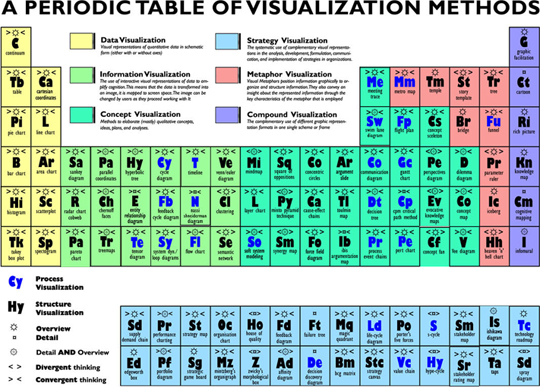
Periodic Table
In class right now, we are learning about the periodic table. Therefor, I thought I could post it on my blog.

Monday, December 14, 2009
Tuesday, November 24, 2009
Vinegar Poppers Lab - On the Next Day....
Friday was the final day of the vinegar poppers lab. On our tenth, in totaling both days, we finally hit the window. However we didn't manage to hit it three times in a row. Our distance sarted increasing when we sparked with a different idea. We mixed water and baking soda together. Then we poured this new solution into the vinegar. We noticed that our distances were much farther. Eventhough we didn't hit the window three times in a row, I am proud that we did once and the lab was a lot of fun. I hope we do something like it again soon.
Friday, November 20, 2009
Vinegar Poppers Lab

Just today, we started a lab where we combined baking soda and vinegar to create a chemical reaction. This chemical reaction created carbondioxide which made a cork fly off a test tube.
When we first recieved this lab, many thoughts were being juggled around in my head. I was anxious to start our lab because it sounded a lot of fun. I personally love messy labs. Our goal was to get the cork to hit the window three times in a row. To accomplish this goal, we needed to find the correct proportion and an accurate launch projection.
This lab looked pretty simple, but it was not as easy as it seemed. Two groups, in my class, hit the window once. The farthest our cork went, in seven tries, was 510cm. Our cork needed to travel 210cm more to reach the window. Our measurements for the best distance was approx. 6mL baking soda (NaHCO3) and approx. 25mL vinegar (CH3COOH).
According to our results, we realized there needs to be more vinegar than baking soda, but not too much. In this lab, sometimes less is more.
According to our results, we realized there needs to be more vinegar than baking soda, but not too much. In this lab, sometimes less is more.
I personally really enjoyed this lab. Even though we didn't hit the window, it was a lot of fun. I entirely enjoyed myself. I'm looking forward to figuring out the exact measurments in the lab tommorow. Hopefully we hit the window three times in a row tommorow!
Extra Credit

One of my favorite T.V. shows is Suite Life On Deck. I havn't watched it lately, but over the summer, I watched it like everyday!
In one episode, Zack creates an explosion and the ship starts stinking horrible. I realized that Zack's explosion was a chemical reaction. In class, I remember learning about how chemical reactions can create explosions. In addition, connecting to what we are learning now, his explosion was a chemical change. Meaning, a substance undergoes a change and a new substance is formed.
Obviously in the episode, the whole thing didn't focus on chemical reactions or explosions. Zack was given the job of hall monitor, and he bacme very snobby. However, that is a whole other story. Who would have a show like "Suite Life On Deck" could connect to science.
Tuesday, November 10, 2009
Mini-Connection

Have you ever baked or cooked something before? Well, guess what! It is all related to science. Baking and science are connected in many ways. Just imagine. Who would have thought of baking as a science? When you bake, you are changing the chemical properties of a substance by heating it. A chemical property describes a substances ability to change into a different substance; a chemical change is the process by which the substance changes. Chemical reaction is another way to say chemical change. In class this afternoon, I realized that all baked and cooked goods are outcomes to a chemical reaction. In addition, when you bake you may also use formulas. Formulas are definitely connected to both science and math. Who knew you could think of baking as a very important science?
I used the the Textbook...
Matter
Buiding blocks of the universe
Saturday, November 7, 2009
Quote

" In Science the credit goes to the man who convinces the world, not to whom the idea first occurred." This meaningful quote, said by Sir William Oslar a Canadian physician, is very true. I completely agree with everything this quote has to say. In science, you must be able to prove to the world that an idea is real. Only then, will the world be able to appreciate the idea. Anyone can think of a mere idea, but it will only have value once it is proven. The idea is like the hypothesis or an opinion of what you think. The world can not come to your feet and start calling you a genius for having an idea. You need to support your idea with proof. Like our lit. teacher teacher always says, "justify our answer/idea." Putting it out there is not enough. For example, Galileo's idea was that the world was round, but no one believed him at first. He was almost categorized as a crazy. We appreciated the idea after we had proof.
Thursday, November 5, 2009
Law's In Action!

Just yesterday, while I was studying, I came across a question about why a car tire would be flat on a cold winter morning. I took me a while to figure out why, but finally the idea sparked. I knew it had to be related to science since the question was on the science study guide. In school we were learning about the different states of matter and all the different laws. For example, Charles Law and Boyle's Law. My conclusion was that the tire would be flat because the tire had been exposed to the cold all night. According to Charle's Law, when the temperature decreases the volume decreases. Therefore, the tire is flat. Also, the molecules inside the tire slow down because of the cold temperature and the pressure inside the tire also decreases. Then Coincidently, while I was shooting some hoops this morning, I realized that my basketball was flat. I wondered why. It braught me back to the tire problem. The basketball had been out in the cold garage all night. I'm guessing that is why my basketball was flat in the moring. It wasn't as flat as the picture above, but it didn't bounce as high as it did before. It had lost some volume. I just thought it was really weird that I experienced this the very next day after the tire problem. It made me wonder: how many more things have I experianced which have been directly connected to science? I bet we come across many problems directly related to science, but we never sit and realize it. Science is everywhere. The Laws are in action all the time!
Wednesday, October 21, 2009
Green Roofs Curb Global Warming, Study Finds

I had recently read an article on how green roofs can curb Global Warming. I think that creating gardens on skyscrapers is a very powerful and unique idea. The plants in the green roofs would absorb carbon-dioxide from the air and reduce the amount of pollution from greenhouse gases. Researchers experimented whether or not the green house roofs worked, down in Detroit. They found out that the roofs captured more than 55,000 tons of carbon-dioxide. That would be equivalent to the amount of carbon-dioxide released by 10,000 mid sized SUVs and trucks. These statistics are directly from www.livescience.com so don't think I'm kidding.
Not only would it it help global warming, the green roofs would also reduce heating and air conditioning bills, the plants would protect the roof from ultraviolet radiation and extreme changes in the temperature, and the plants would also detain storm water which could cause a flooding or erosion. It will also help the economy by drawing in more visitors. In addition, its maintanance will offer that many more unemployed people occupations. Imagine taking off from a plane and when you look down at the city, you see astonishing gardens on top of skyscrapers. It would be a magnificent and incredibly beautiful attraction. Who knew that something so beautiful could be so helpful.
In my opinion, this whole idea of green roofs is amazing. However, just today in Social Studies, we were having a conversation on how much soil the United States, and the rest of the world, uses annualy. In the article, it said that the number of green roofs increased by more than 35% between the year 2007 & 2008 in the United States. In Germany, 12% of all flat roofs are green. Imagine how much extra soil was used just there. Using too much soil can lead to bigger problems. It bothers me that when you try to solve one problem, you create another. Now I'm not sure if all problems can be fixed. There has to be a way where we can solve every problem without creating another. Who knows? Maybe there is.
Some questions I had...
Who created this idea?
How much does it cost to make one green roof?
If a building caught on fire, would the garden become a threat?
If you could answer some of my questions or have your own opinion, please leave a comment.
Friday, September 18, 2009
My Blog For Why Flamingos Stand On One Leg

Mr. Anderson has studied many flamingos and their behaviors. For example, "why do flamingos bend their backs to the right and not the left when they are asleep?" Mr. Anderson has two theories. First, there is the fatigue theory. Scientists believe that standing on one leg helps keeps their muscles from stiffening. He also thinks that it would help them escape when being hunted down by a predator. However, this fatigue theory was no success. After some research, scientists found out that flamingos escaped more quickly when they were on two legs.
The second theory was thermoregulation. He believed that the strange posture may be related to conserving body heat. This theory had greater success than the previous one. They discovered that birds favored standing on one leg when the temperature was cooler. Also, he believes that when flamingos come out of water, their body temperature drops very quickly, so they need to save as much heat as they can. However, my opinions were slightly different.
No offence to Mr. Anderson, but I think he was trying a bit too hard to come up with theories.
I believe that their position is probably a comfortable way for them to relax. For example, this ties along with the thermoregulation idea, when we're cold we cuddle ourselves to stay warm. Maybe that's what the flamingos are trying to do and he just tried to explain in it in a more scientific and complicated way. They're probably tiring to keep as many body parts close together as possible without falling, so they keep one leg down. Another answer maybe as simple as nature. Animals that walk on four feet may be wondering why we walk on two feet when we could walk on four, but it's just our nature. There can obviously be many theories to why flamingos stand on one leg, but for right now only god, and the flamingos, know the real answer.
I got my information from http://www.livescience.com/animals/090917-flamingos-one-leg.html
Subscribe to:
Posts (Atom)