Global warming does not neccesarily have to only relate to social studies or science. In fact, global warming is largely based on math aswell. Mathamatical skills are required to analyze what will happen in the future. Scientists need to create line graphs and scatter plots for co2 emittions, population, pollution, climate changes and more over an extended period of time. They could then fit these points to a line and create a linear equation. Extrapolation can be used to predict the effects in the future. You would also need math to calculate personal carbon emmitions or carbon emmitions in your community. The results relate to science and social studies, but the results are found by mathamatics. Statistics, calculating weather (F-C or vice-versa), calculating the rise of sea level, calculation the use of fossil fuels, and creating tables all relate to math. Almost any thing we do can relate to math!!!
Monday, January 25, 2010

Monday, January 11, 2010
GLOBAL WARMING
Global Warming is a major issue in the world right now. We humans are messing with the Earth's balance and eco-systems. Global warming is causing extrame climate changes in the climate and weather.
GREENhouse Gases
Global warming is caused by the greenhouse gas emitions. "The Earth stays warm because of something called the 'green house effect.' This is the natural process in which gases in Earth's atmosphere, known as greenhouse gases, trap heat from just like the glass walls of a green house do."(Unwin 8) Eventhough we need greenhouse gases for the earth to stay warm, if there is too much more heat will be trapped in the earth atmosphere.
Greenhouse gases- volcanic eruptions, forest fires, fossil fuels like coal, oil, gasoline etc.
When grazing cows cut the cheese, they realese methane which is also a green house gas.
Impacts
Flooding: Because of the warm temperature, ice in the poles is melting. This will cause a rise in sea level. The rise in sea level will cause a major flooding. Not only would a flooding wipe out animals and human beings, reperations would cost billions of dollars.
Dramatic Rise In Precipition: The hot weather makes more evaporate causing more drouts, however, the hot weather will also soak up lots of moisture at the the same time.
Polar Bears: The melting ice is removing hunting ground from poloar bears. Also, many polar bears have drowned for thi reason.
Coral Reefs: The rise in ocean temperature is causing a massive coral bleaching. This is majorly effectiong the ecosystems. Coral reefs are living organisms which also sustain a large number of other fish. Coral Reefs are shelter for thousands of marine species and also helps us in fishing. In addition, they provide natural protection from storm surges.
MANY MORE..........................
Hence..........Global Warming must be stopped!!!
Wednesday, December 16, 2009
Periodic Table
In class right now, we are learning about the periodic table. Therefor, I thought I could post it on my blog.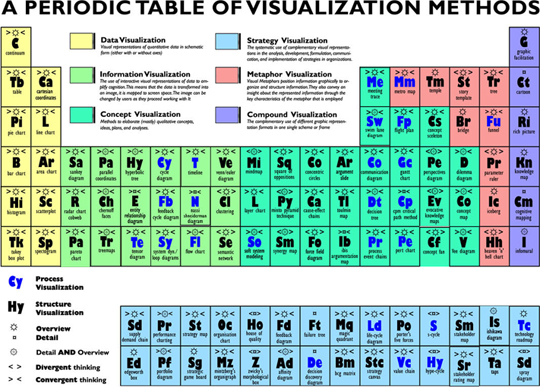
Monday, December 14, 2009
Tuesday, November 24, 2009
Vinegar Poppers Lab - On the Next Day....
Friday was the final day of the vinegar poppers lab. On our tenth, in totaling both days, we finally hit the window. However we didn't manage to hit it three times in a row. Our distance sarted increasing when we sparked with a different idea. We mixed water and baking soda together. Then we poured this new solution into the vinegar. We noticed that our distances were much farther. Eventhough we didn't hit the window three times in a row, I am proud that we did once and the lab was a lot of fun. I hope we do something like it again soon.
Friday, November 20, 2009
Vinegar Poppers Lab

Just today, we started a lab where we combined baking soda and vinegar to create a chemical reaction. This chemical reaction created carbondioxide which made a cork fly off a test tube.
When we first recieved this lab, many thoughts were being juggled around in my head. I was anxious to start our lab because it sounded a lot of fun. I personally love messy labs. Our goal was to get the cork to hit the window three times in a row. To accomplish this goal, we needed to find the correct proportion and an accurate launch projection.
This lab looked pretty simple, but it was not as easy as it seemed. Two groups, in my class, hit the window once. The farthest our cork went, in seven tries, was 510cm. Our cork needed to travel 210cm more to reach the window. Our measurements for the best distance was approx. 6mL baking soda (NaHCO3) and approx. 25mL vinegar (CH3COOH).
According to our results, we realized there needs to be more vinegar than baking soda, but not too much. In this lab, sometimes less is more.
According to our results, we realized there needs to be more vinegar than baking soda, but not too much. In this lab, sometimes less is more.
I personally really enjoyed this lab. Even though we didn't hit the window, it was a lot of fun. I entirely enjoyed myself. I'm looking forward to figuring out the exact measurments in the lab tommorow. Hopefully we hit the window three times in a row tommorow!
Extra Credit

One of my favorite T.V. shows is Suite Life On Deck. I havn't watched it lately, but over the summer, I watched it like everyday!
In one episode, Zack creates an explosion and the ship starts stinking horrible. I realized that Zack's explosion was a chemical reaction. In class, I remember learning about how chemical reactions can create explosions. In addition, connecting to what we are learning now, his explosion was a chemical change. Meaning, a substance undergoes a change and a new substance is formed.
Obviously in the episode, the whole thing didn't focus on chemical reactions or explosions. Zack was given the job of hall monitor, and he bacme very snobby. However, that is a whole other story. Who would have a show like "Suite Life On Deck" could connect to science.
Subscribe to:
Posts (Atom)